Practical Science Activities Using Low-Cost Materials: A Complete Guide for Ghanaian Basic School Teachers and Students

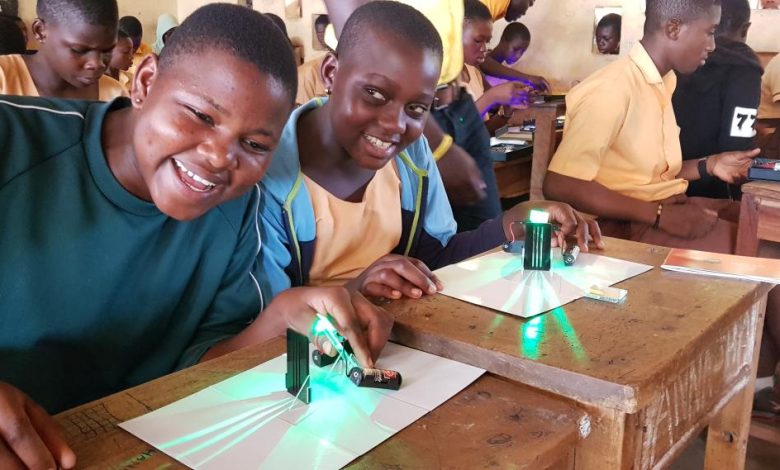
Science becomes exciting when learners can observe, investigate, and discover concepts for themselves. Unfortunately, many basic schools face challenges such as limited laboratory facilities, inadequate equipment, and restricted budgets. These obstacles often discourage practical lessons, even though hands-on learning is a key part of Ghana’s Standard-Based Curriculum (SBC).
The encouraging news is that meaningful science practicals do not always require expensive laboratory equipment. Many scientific concepts can be taught effectively using safe, everyday materials that are readily available in homes, markets, and local communities. This article presents practical science activities using low-cost materials, explains how to organise engaging lessons, and offers tips for making science enjoyable while maintaining safety. Take very good note of this article, as we will give you broad practical science activities that will help you cut costs when dealing with science materials
Why Practical Science Matters in Basic Schools
Science is best learned through observation, experimentation, and investigation. Practical activities allow pupils to ask questions, test ideas, and draw conclusions from evidence.
Regular practical lessons help learners to:
- Develop curiosity about the natural world.
- Improve observation and problem-solving skills.
- Understand scientific concepts more deeply.
- Build confidence in conducting investigations.
- Connect classroom learning with everyday life.
In our experience supporting classroom instruction, pupils remember scientific ideas longer when they participate in simple experiments rather than only reading textbook explanations.
Challenges Facing Practical Science Teaching
Many teachers are eager to conduct practical lessons but encounter obstacles such as:
- Limited laboratory facilities.
- Insufficient science equipment.
- Large class sizes.
- Inadequate teaching materials.
- Limited lesson time.
- Concerns about safety.
These challenges should not prevent practical learning. Creative planning and the use of locally available materials can provide meaningful learning experiences.
Benefits of Using Low-Cost Materials
Low-cost teaching resources offer several advantages.
They:
- Reduce the cost of science instruction.
- Encourage creativity among teachers and pupils.
- Make practical activities accessible in every school.
- Promote environmental sustainability through recycling.
- Demonstrate that science exists in everyday life.
When testing classroom activities with recycled materials, learners often show greater enthusiasm because they recognise the items from their own homes and communities.
Safety First During Practical Activities
Safety should always be the teacher’s first priority.
Before every activity:
- Explain the purpose of the investigation.
- Demonstrate correct procedures.
- Supervise pupils throughout the lesson.
- Avoid hazardous chemicals.
- Keep workspaces clean and organised.
- Ensure pupils wash their hands after activities when necessary.
Simple classroom rules create a safe environment for learning.
Activity 1: Investigating Floating and Sinking
Learning Objective
Help pupils understand why some objects float while others sink.
Materials
- Basin or bucket of water
- Stone
- Leaf
- Plastic bottle cap
- Piece of wood
- Metal spoon
- Rubber ball
Procedure
- Fill a container with water.
- Ask pupils to predict which objects will float.
- Place each object into the water.
- Record observations.
- Discuss why different objects behave differently.
Skills Developed
- Observation
- Prediction
- Classification
- Scientific reasoning
Activity 2: Growing Bean Seeds
Learning Objective
Demonstrate how plants germinate.
Materials
- Dry beans
- Transparent plastic cup
- Cotton wool or tissue
- Water
Procedure
- Place damp cotton wool inside the cup.
- Put several beans on the cotton.
- Keep the cotton moist.
- Observe daily for one week.
- Record changes.
Discussion Questions
- Which part appeared first?
- Why does the seed need water?
- What would happen without sunlight after germination?
This activity encourages patience and careful observation.
Activity 3: Demonstrating Air Pressure
Learning Objective
Show that air occupies space and exerts pressure.
Materials
- Glass
- Bowl of water
- Paper towel
Procedure
- Place paper inside the glass.
- Turn the glass upside down.
- Push it straight into the water.
- Remove the glass carefully.
- Check whether the paper is wet.
Expected Observation
The paper remains dry because trapped air prevents water from entering the glass.
Activity 4: Homemade Balance Scale
Learning Objective
Introduce the concept of mass and comparison.
Materials
- Coat hanger or stick
- String
- Two plastic cups
- Tape
Procedure
- Suspend the hanger.
- Attach identical cups to each side.
- Place different objects in each cup.
- Compare their masses.
Concepts Learned
- Heavy and light
- Balanced and unbalanced
- Measurement
Activity 5: Separating Mixtures
Learning Objective
Understand methods of separating materials.
Materials
- Sand
- Rice
- Water
- Sieve
- Cloth
- Transparent container
Procedure
Allow pupils to separate mixtures using:
- Hand picking
- Sieving
- Filtration
- Settling
Discuss where these methods are used in daily life.
Activity 6: Exploring Magnetism
Learning Objective
Identify magnetic and non-magnetic materials.
Materials
- Small magnet
- Nails
- Coins
- Plastic bottle cap
- Wooden stick
- Paper clips
Procedure
Ask pupils to predict which items will be attracted to the magnet before testing each object.
Encourage learners to explain why some materials respond while others do not.
Activity 7: Making a Simple Water Filter
Learning Objective
Demonstrate basic filtration.
Materials
- Plastic bottle
- Gravel
- Sand
- Charcoal
- Cotton
- Dirty water
Procedure
- Cut the bottle.
- Arrange filtration materials in layers.
- Pour dirty water through the filter.
- Observe the filtered water.
Explain that filtered water is not automatically safe to drink without proper treatment.
Activity 8: Investigating Evaporation
Learning Objective
Understand how water changes into vapour.
Materials
- Two shallow containers
- Water
- Sunny outdoor space
- Shaded area
Procedure
- Fill both containers with equal amounts of water.
- Place one in sunlight.
- Place the other in shade.
- Observe daily.
Discuss how heat affects evaporation.
Activity 9: Building a Simple Weather Station
Learning Objective
Observe daily weather conditions.
Materials
- Cardboard
- Plastic bottle
- Ruler
- Notebook
- Thermometer (if available)
Activities
Pupils can record:
- Temperature
- Rainfall
- Wind direction
- Cloud cover
- Sunshine
This encourages long-term observation and data recording.
Activity 10: Investigating Sound Vibrations
Learning Objective
Understand that sound is produced through vibrations.
Materials
- Rubber bands
- Empty tissue box
- Plastic container
Procedure
Stretch rubber bands across the container.
Ask pupils to pluck them gently and compare the sounds produced by different band thicknesses and tensions.
Encouraging Scientific Thinking
Practical activities should focus on inquiry rather than memorising facts.
Ask pupils questions such as:
- What do you notice?
- Why do you think this happened?
- What evidence supports your idea?
- How could we test this differently?
- What conclusion can we draw?
These questions promote critical thinking and scientific reasoning.
Organising Practical Lessons in Large Classes
Large classes are common in many Ghanaian schools, but practical work remains possible.
Consider these strategies:
- Divide pupils into small groups.
- Assign group leaders.
- Rotate activity stations.
- Share materials efficiently.
- Prepare equipment before class.
- Give clear written and verbal instructions.
Good organisation helps every learner participate actively.
Integrating Practical Science with Ghana’s Standard-Based Curriculum
The Standard-Based Curriculum encourages learners to investigate, collaborate, and solve problems.
Low-cost practical activities support curriculum competencies by helping pupils develop:
- Critical thinking.
- Creativity.
- Communication.
- Collaboration.
- Problem-solving.
- Digital awareness where appropriate.
Practical lessons also strengthen values such as responsibility, curiosity, and teamwork.
Assessing Practical Science Skills
Assessment should focus on both knowledge and practical ability.
Teachers can evaluate:
- Observation skills.
- Accuracy in recording results.
- Participation.
- Teamwork.
- Ability to explain findings.
- Use of scientific vocabulary.
Simple observation checklists provide valuable evidence of learning.
Involving Parents and Communities
Parents and community members can support science learning by providing recyclable materials such as:
- Plastic bottles.
- Cardboard boxes.
- Bottle tops.
- Empty tins.
- Seeds.
- Containers.
- String.
Community involvement reduces costs while encouraging shared responsibility for education.
Common Mistakes to Avoid During Practical Lessons
Avoid these common challenges:
- Demonstrating everything without pupil participation.
- Giving unclear instructions.
- Using activities without connecting them to lesson objectives.
- Ignoring safety procedures.
- Rushing discussions after experiments.
Reflection is just as important as the practical activity itself because it helps pupils connect observations to scientific concepts.
Conclusion
Practical science does not depend on expensive laboratories or sophisticated equipment. With thoughtful planning, creativity, and locally available materials, teachers can create engaging learning experiences that help pupils understand scientific concepts through observation and investigation.
Simple activities using everyday objects inspire curiosity, improve problem-solving skills, and make science enjoyable. By embracing low-cost practical approaches, Ghanaian schools can provide meaningful science education that prepares learners to think critically and apply scientific knowledge in everyday life.
Frequently Asked Questions
What are low-cost science materials?
Low-cost science materials are inexpensive or recycled items such as plastic bottles, beans, sticks, bottle tops, cardboard, cups, sand, stones, and containers that can be used to demonstrate scientific concepts safely and effectively.
Why are practical science activities important in basic schools?
Practical activities help pupils understand concepts through direct experience. They improve observation, critical thinking, problem-solving, collaboration, and scientific inquiry while making lessons more engaging.
How can teachers conduct practical science lessons without a laboratory?
Teachers can use locally available materials, organise pupils into small groups, prepare simple investigations, and connect experiments to everyday experiences. Many science concepts can be demonstrated effectively in a regular classroom or school compound.
How can parents support practical science learning at home?
Parents can encourage children to observe nature, grow plants, recycle household materials for simple experiments, discuss scientific ideas during daily activities, and support safe investigations under adult supervision.