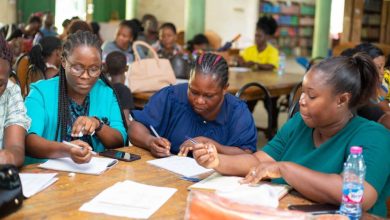


Assessment is one of the biggest challenges many teachers face under Ghana’s Standard-Based Curriculum (SBC). While lesson delivery may be straightforward, determining whether learners have truly acquired the expected competencies often requires careful planning and the right assessment methods.
Many teachers in Ghana also struggle to balance formative and summative assessment, provide meaningful feedback, and gather evidence of learning without making assessment stressful for learners. This guide explains practical ways to assess learners effectively using Ghana’s Standard-Based Curriculum. Whether you are a newly trained teacher, an experienced educator, or a student teacher, you will learn how to plan assessments, collect evidence of learning, and improve learner outcomes.
Understanding Assessment in Ghana’s Standard-Based Curriculum
The Ghana Standard-Based Curriculum focuses on developing competencies rather than simply helping learners memorize facts. Assessment is therefore designed to measure what learners know, what they understand, and what they can do.
Instead of relying only on written examinations, teachers are encouraged to use multiple assessment strategies throughout the teaching and learning process.
The key purpose of assessment is to:
- Monitor learners’ progress.
- Identify learning gaps early.
- Improve classroom instruction.
- Support individual learner development.
- Provide evidence for reporting achievement.
Assessment becomes part of teaching rather than an activity conducted only at the end of the term.
The Three Main Types of Assessment
1. Assessment for Learning (AfL)
Assessment for Learning takes place before and during lessons. It helps teachers understand learners’ current knowledge and adjust instruction accordingly.
Examples include:
- Oral questioning
- Brainstorming
- Class discussions
- Quick quizzes
- Think-Pair-Share activities
- Observation during practical work
In our experience, teachers who consistently use Assessment for Learning identify misconceptions much earlier than those who rely only on end-of-term examinations.
2. Assessment as Learning (AaL)
Assessment as Learning encourages learners to reflect on their own progress.
Learners become active participants by:
- Assessing their own work
- Setting learning goals
- Identifying areas for improvement
- Reflecting after completing activities
This approach develops independent learning and critical thinking.
3. Assessment of Learning (AoL)
Assessment of Learning measures what learners have achieved after instruction.
Examples include:
- End-of-topic tests
- Mid-term examinations
- End-of-term examinations
- Projects
- Practical assessments
Although important, Assessment of Learning should not be the only form of assessment used in the classroom.
Principles of Effective Assessment Under the SBC
Good assessment should always be:
Valid
Assess exactly what learners were taught.
Reliable
Produce consistent results when used fairly.
Fair
Give every learner equal opportunity to demonstrate learning.
Continuous
Assessment should occur throughout teaching instead of only during examinations.
Learner-Centred
Activities should allow learners to demonstrate understanding in different ways.
Step 1: Begin with the Learning Indicator
Every assessment should start with the learning indicator found in the curriculum.
For example:
Learning Indicator:
“Explain the importance of personal hygiene.”
Your assessment should measure whether learners can actually explain personal hygiene rather than simply define the term.
Poor assessment:
“What is hygiene?”
Better assessment:
“Describe three ways personal hygiene prevents diseases in your community.”
The second question measures understanding and application.
Step 2: Select the Appropriate Assessment Method
Different learning outcomes require different assessment techniques.
| Learning Outcome | Best Assessment Method |
|---|---|
| Knowledge | Quiz, oral questions |
| Understanding | Explanation, discussion |
| Practical skills | Demonstration, observation |
| Creativity | Projects, presentations |
| Collaboration | Group work |
| Communication | Oral presentation |
Using multiple assessment methods provides a more accurate picture of learner achievement.
Step 3: Develop Clear Assessment Criteria
Learners perform better when they understand how their work will be assessed.
For example, if learners are preparing a presentation, the criteria might include:
- Accuracy of information
- Confidence during presentation
- Organization of ideas
- Appropriate language
- Teamwork
Sharing these criteria before the activity improves learner performance.
Step 4: Use Observation Effectively
Observation is one of the most valuable assessment tools in the Standard-Based Curriculum.
Teachers should observe learners while they:
- Work in groups
- Conduct experiments
- Solve problems
- Read aloud
- Participate in discussions
- Complete practical activities
During classroom observations, keeping a simple checklist often makes recording learner progress easier than relying on memory.
Step 5: Ask Higher-Order Questions
Assessment should go beyond recalling facts.
Instead of asking:
“What is photosynthesis?”
Ask:
- Why is photosynthesis important to living organisms?
- How would life change if plants could not carry out photosynthesis?
- Explain photosynthesis using your own words.
Such questions assess deeper understanding.
Step 6: Encourage Self and Peer Assessment
The Standard-Based Curriculum encourages learners to evaluate themselves and their peers respectfully.
Learners may:
- Exchange exercise books.
- Use marking guides.
- Reflect on strengths.
- Suggest improvements.
This builds responsibility, confidence, and critical thinking.
Teachers should supervise peer assessment to ensure fairness and constructive feedback.
Step 7: Keep Assessment Records
Accurate record-keeping is essential.
Maintain records such as:
- Class tests
- Observation notes
- Portfolio scores
- Practical activities
- Homework performance
- Group work participation
These records help teachers prepare comprehensive learner reports.
Using Performance Tasks
Performance tasks require learners to apply knowledge to real-life situations.
Examples include:
Mathematics
Ask learners to prepare a simple family budget.
Science
Conduct an experiment showing water filtration.
English Language
Write a formal letter requesting permission for a school event.
Social Studies
Design a community sanitation campaign.
Performance tasks measure practical competencies rather than memorization.
Using Projects for Assessment
Projects allow learners to investigate topics over time.
Examples include:
- Community mapping
- Plant growth investigations
- Local history research
- Waste recycling projects
- Cultural exhibitions
Projects also encourage creativity, collaboration, and problem-solving.
Portfolio Assessment
A portfolio is a collection of a learner’s work over a period.
It may include:
- Class assignments
- Drawings
- Essays
- Projects
- Reflection journals
- Practical activities
- Reading records
Portfolios help teachers observe long-term progress instead of relying on one examination.
Giving Constructive Feedback
Assessment should always include meaningful feedback.
Effective feedback is:
- Specific
- Timely
- Encouraging
- Action-oriented
Instead of saying:
“Good work.”
Try:
“You explained the causes clearly. Next time, include more local examples to strengthen your answer.”
Constructive feedback motivates learners to improve.
Common Assessment Mistakes to Avoid
Many teachers unintentionally reduce the effectiveness of assessment.
Avoid these mistakes:
- Testing content that was never taught.
- Using only written examinations.
- Giving feedback too late.
- Ignoring practical skills.
- Asking only recall questions.
- Failing to keep assessment records.
- Assessing too many objectives in one task.
Small improvements in assessment planning often lead to significant gains in learner achievement.
Integrating Assessment into Daily Teaching
Assessment should happen naturally throughout lessons.
A simple lesson sequence may look like this:
- Begin with prior knowledge questions.
- Introduce the lesson.
- Observe learners during activities.
- Ask probing questions.
- Provide immediate feedback.
- Conduct a quick exit ticket.
- Record observations.
When testing this approach across different classroom settings, teachers often discover learning difficulties before they become major academic challenges.
Supporting Learners with Different Abilities
Inclusive assessment ensures every learner has an opportunity to succeed.
Teachers can:
- Allow additional time where necessary.
- Use visual aids.
- Accept oral responses when appropriate.
- Provide differentiated tasks.
- Use group support activities.
- Give clear instructions.
Assessment should measure learning rather than disadvantage learners because of differing abilities.
Using Digital Tools for Assessment
Technology can simplify assessment where resources permit.
Useful tools include:
- Google Forms
- Microsoft Forms
- Educational quiz platforms
- Interactive classroom polling tools
- Learning management systems
These tools provide quick feedback and simplify record keeping.
However, traditional assessment methods remain effective in schools with limited access to technology.
Best Practices for Teachers
Successful assessment under the Standard-Based Curriculum involves consistency.
Consider these best practices:
- Align every assessment with the learning indicator.
- Use a variety of assessment methods.
- Observe learners regularly.
- Encourage learner reflection.
- Provide prompt feedback.
- Keep detailed assessment records.
- Use assessment results to improve teaching.
These habits create a classroom where assessment supports learning instead of creating unnecessary anxiety.
Conclusion
Assessing learners under Ghana’s Standard-Based Curriculum goes beyond assigning marks at the end of a lesson. It involves continuously gathering evidence of learning, providing helpful feedback, and creating opportunities for every learner to demonstrate competence in meaningful ways.
By combining observation, questioning, projects, portfolios, performance tasks, and written assessments, teachers can gain a complete understanding of learner progress. Most importantly, effective assessment should guide future instruction, motivate learners, and help every child reach the expected learning standards.
Frequently Asked Questions (FAQs)
What is the main purpose of assessment in Ghana’s Standard-Based Curriculum?
The main purpose is to gather evidence of learners’ knowledge, skills, values, and competencies so teachers can improve instruction, support learner growth, and accurately measure achievement.
How often should teachers assess learners under the Standard-Based Curriculum?
Assessment should be continuous. Teachers are encouraged to assess learners before, during, and after lessons using a variety of methods rather than relying solely on end-of-term examinations.
What assessment methods are recommended in the Standard-Based Curriculum?
Recommended methods include observation, oral questioning, quizzes, projects, portfolios, practical activities, presentations, peer assessment, self-assessment, written tests, and performance tasks.
Why is formative assessment important in the Standard-Based Curriculum?
Formative assessment helps teachers identify learning gaps early, adjust teaching strategies, provide timely feedback, and support learners before misconceptions become long-term challenges.