Step-by-step guide to creating a winning Curriculum Vitae (cv) with real examples

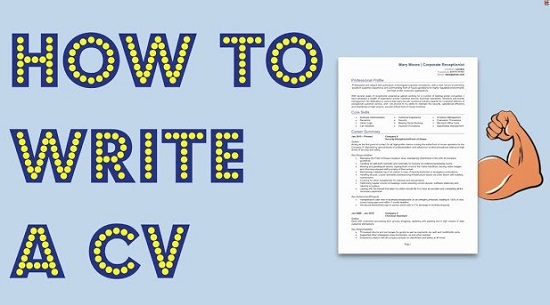
Your Curriculum Vitae (CV) is likely to be one of the most significant tools you have in your job search. As such, it is usually your first chance to make an impression on an employer. In addition to simply listing your qualifications, a good CV should demonstrate your worth and suitability for the position you are applying for.
Many candidates find themselves struggling when it comes to creating their CV. Their CVs tend to be either too generic, badly laid out, or include many non-relevant details. The purpose of this article is to provide you with the step-by-step processes involved in writing a professional and successful CV. We will also provide you with examples from which you can draw inspiration as you write your own CV.
1. Develop a clear and easy-to-read CV
While creating a CV can seem daunting at first, there are some basic rules to help you develop a CV that is both effective and efficient. One of the main reasons job seekers fail in their job searches is due to poorly formatted and confusingly structured CVs. In addition, including unnecessary information can negatively impact your chances of being considered by an employer. Therefore, it is crucial to use a format that is easy to read and understand. Employers typically only scan a CV for a couple of minutes; therefore, you need to make a good impression quickly.
2. Identify your contact information
The first part of your CV should contain your contact information. While this section is fairly straightforward, employers may take note of whether or not they can easily find ways to contact you. Therefore, consider making this section as professional and simple as possible. The following are the types of items that should be included:
- Contact name
- Phone number
- E-mail address
- City/state (optional but helpful)
In contrast, do not include your marital status, religious beliefs, or photo unless requested by the employer.
Example:
Kwame Mensah
055 xxx XXXX
Kwame.mensah@Email.com
Kumasi, Ghana
3. Create a strong personal profile
Your personal profile, also known as a summary, is an introductory paragraph that describes who you are and what you bring to the table. Keep your personal profile concise and ideally limited to 3-4 sentences. Use action verbs like “experienced,” “motivated,” or “enthusiastic.” However, ensure that your profile matches the position you are applying for.
Example:
A motivated and detail-oriented graduate with strong communication and problem-solving skills. Experienced in teamwork and customer service through internship roles. Seeking an opportunity to contribute to organizational growth while developing professional skills.
Tailor your profile to the job you’re applying for.
4. List your most important skills
In addition to including your key skills in your resume, highlight those that are most applicable to the job you are seeking. Do not include generic or frequently used words or phrases without providing specific examples of how you’ve utilized them. For example:
- Communication skills
- Time management
- Microsoft office (word and Excel)
- Problem-solving ability
Example:
- Good communication orally and in writing.
- Data analysis in Excel
- Works independently and in groups.
Be certain to incorporate the keywords from the job posting into your resume.
5. Outline your education
Outline your educational history, starting from the most current. When outlining your education history, be certain to include:
- Name of institution
- Qualifications awarded
- Date graduated
Example:
B.ed.
University of Cape Coast
2023
Wassce certificate
Prempeh college
2019
You can also include any relevant achievements, such as awards or high grades in subjects.
6. Outline any work experience or internships
This is perhaps one of the most critical parts of your resume. Even if you don’t have much formal work experience, try to include internships, volunteer opportunities, or school assignments. To outline each experience:
- Job title
- Organization name
- Length of employment
- Key responsibilities/achievements
Example:
Teaching assistant (intern)
ABC Basic School, Kumasi
Jan 2023 – May 2023
- Helped prepare lessons and manage classrooms.
- Assisted students with reading/writing.
- Recorded attendance accurately.
Emphasise what you did and what you learned.
7. If applicable, provide other relevant sections
There are additional areas of your resume that you may want to consider based on your previous experience:
Training/certifications
Short courses or training programs
Example: certificate in ICT Basics (2022)
Leadership roles
Example: class prefect, Prempeh College
Student meetings/organizations
Interests/Hobbies
As mentioned above, keep Interests/Hobbies simple and directly relevant
Example: reading, football, volunteering
To summarize, there is no requirement for you to use complex terms or add too much detail in order to write a winning CV. Instead, what is required of you is to present your qualifications, skills, and work experience in a manner that is both clear and relevant to the specific job(s) you are interested in.