
Ways to Develop Well-Organized Lesson Plans That Will Help the Basic School Teacher Achieve Their Goal

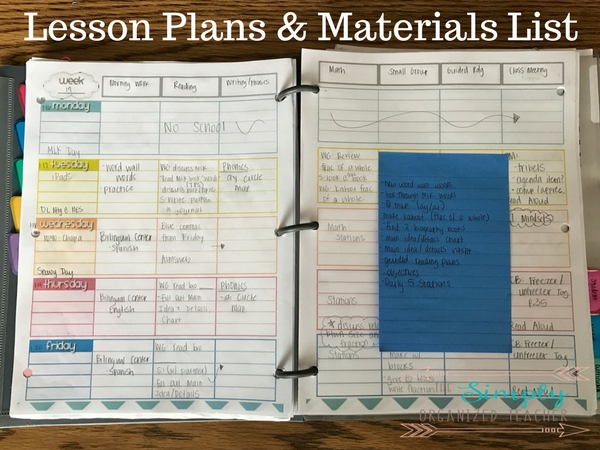
An organized lesson plan is very important to a basic school teacher. An organized lesson plan serves as a tool to help a teacher organize his/her thoughts about what he/she wants to accomplish during the course of a lesson. In other words, it is a tool that guides a teacher through the instructional process and helps him/her provide evidence that the educational goals of the curriculum are met.
A teacher who does not take the time to develop an organized lesson plan may find himself/herself wandering aimlessly throughout a lesson. The teacher’s lack of organization will cause confusion among the students. This type of unorganized instruction will result in poor performance from the students. Therefore, developing an organized lesson plan replica watches will save time for both the teacher and the student. In addition, having an organized lesson plan will increase the self-confidence of a teacher when providing instruction.
Having a well-developed lesson plan will give a teacher the opportunity to know exactly what she/he will be doing throughout a particular lesson. In turn, this will allow her/him to provide students with meaningful opportunities to learn. As a result, students will experience greater success in their educational endeavors.
In summary, a well-organized lesson plan is a necessity for any teacher, regardless of whether they are new to education or have been teaching for years. It is the first step toward establishing an effective learning environment for students.
Lesson plans serve as a reminder to teachers to provide their students with a structured format that enables them to meet specific objectives while at the same time promoting their own professional development. As such, we want to show you how to create an organized and successful lesson plan.
Table of Contents
What Is Included in a Lesson Plan?
A lesson plan contains information regarding a variety of items, including objectives, procedures, materials, and evaluation criteria. These four components enable the instructor to design and implement a lesson that meets the desired educational objective.
As previously stated, one of the most important things that instructors must consider when designing a lesson plan is the objective(s) of the lesson. The objective(s) represent what the instructor wants to have happen in terms of student achievement. When writing objectives, instructors must write them clearly and concisely so that everyone involved (i.e., instructors, students, and administrators) knows exactly what is expected. For example:
- “Students will be able to define three types of plants.”
- “Students will be able to complete six addition problems.”
Benefits of Creating a Lesson Plan
Creating a lesson plan has many benefits for educators. First and foremost, creating a lesson plan allows educators to be more organized. With a written outline of what needs to occur during a lesson, teachers can better manage their time during lessons. Another benefit of creating a lesson plan is that it improves student learning. When educators present lessons in an orderly fashion, students are better able to comprehend and retain information presented to them. Finally, creating a lesson plan increases educator confidence. Educators who spend time preparing for lessons tend to feel more confident about presenting those lessons.
Components of an Effective Lesson Plan
The five major components of an effective lesson plan are:
1. Learning Objectives
Learning objectives are statements of what students are supposed to learn or demonstrate after completing a lesson or unit. They should be specific enough to measure with accuracy.
Examples:
- Students will be able to describe three parts of a plant.
- Students will be able to solve eight subtraction problems.
2. Introduction
The introduction is meant to capture the interest of students and relate the topic being covered to something familiar to them.
Examples:
- Ask simple questions or share a short story related to the topic.
- Show pictures or videos related to the topic.
3. Teaching Procedures
Teaching procedures consist of all of the activities or techniques used by an educator during the delivery of instruction. These activities could include demonstrations, group projects, or class discussion.
Examples:
- A demonstration is done on the blackboard.
- Students complete group projects.
4. Materials Used During Instruction
Materials are those physical resources that an educator uses during the delivery of instruction. These could include charts, flashcards, real-life examples, etc.
Examples:
- Pictures or diagrams of charts.
- Real-life examples of objects.
- Flashcards or vocabulary cards.
5. Evaluation Criteria
Evaluation criteria are measures that indicate whether students have learned what was intended. Some common evaluation criteria are quizzes, tests, class participation, oral reports, and written assignments.
Examples:
- Quizzes or tests are given periodically.
- Oral presentations by individual students.
- Written essays based upon reading assignments.
Developing an Effective Lesson Plan
Developing an effective lesson plan involves several steps. Follow these steps in order to develop effective lessons.
Step 1: Review the Curriculum
Review your textbook and/or curriculum guidelines in order to determine what topics need to be covered during this particular unit/lesson. Make sure you cover all necessary material.
Step 2: Determine Student Needs
Determine how much prior knowledge students possess and where there might be gaps in knowledge. Consider age-related developmental factors as well as the academic skills and interests of your students.
Step 3: Identify Appropriate Strategies for Delivery
Identify appropriate strategies for delivering instruction. Different topics lend themselves to different approaches. For example, young children tend to respond best to hands-on and visual learning strategies.
Step 4: Create an Outline of the Lesson
Create an outline of the lesson broken down into small segments and including all necessary elements. Each segment should contain some activity and purposeful interaction among students.
Step 5: Prepare All Necessary Materials
Prepare all materials needed for each segment of the lesson. Gather any handouts, visual aids or equipment needed for each segment. Test materials ahead of time.
Step 6: Plan for Student Assessments
Plan how you will assess student progress during and/or after each segment of the lesson. This may include giving quizzes or informal assessments along the way.
Step 7: Evaluate and Revise
Evaluate how well each segment went and revise accordingly. If there were areas of difficulty or misunderstandings, adjust subsequent segments accordingly.
Tips for Writing Effective Lesson Plans
Here are some tips for developing effective lesson plans:
- Keep it simple: Do not make your lesson plans too complicated.
- Be flexible: Remain open-minded when teaching. Be prepared to adjust your approach if it appears your students are struggling with certain concepts.
- Use time management: Allocate sufficient time for each component of your lesson.
- Link previous learning: Connect new learning ideas to previous ones whenever possible. This is particularly important when working with young children.
- Encourage active learning: Provide ample opportunity for your students to participate in the learning process.
To conclude, the most important thing that you need to do as a teacher is to plan your lessons. If you have planned effectively, you will be able to provide an opportunity for all of your students to learn by organizing what you are going to teach them, making it easier for them to understand, and helping make school interesting. With proper objective-setting, use of suitable methodology, assessment of learning, etc., we can provide our students with opportunities to experience success in the classroom.